Tools
Scientific Articles
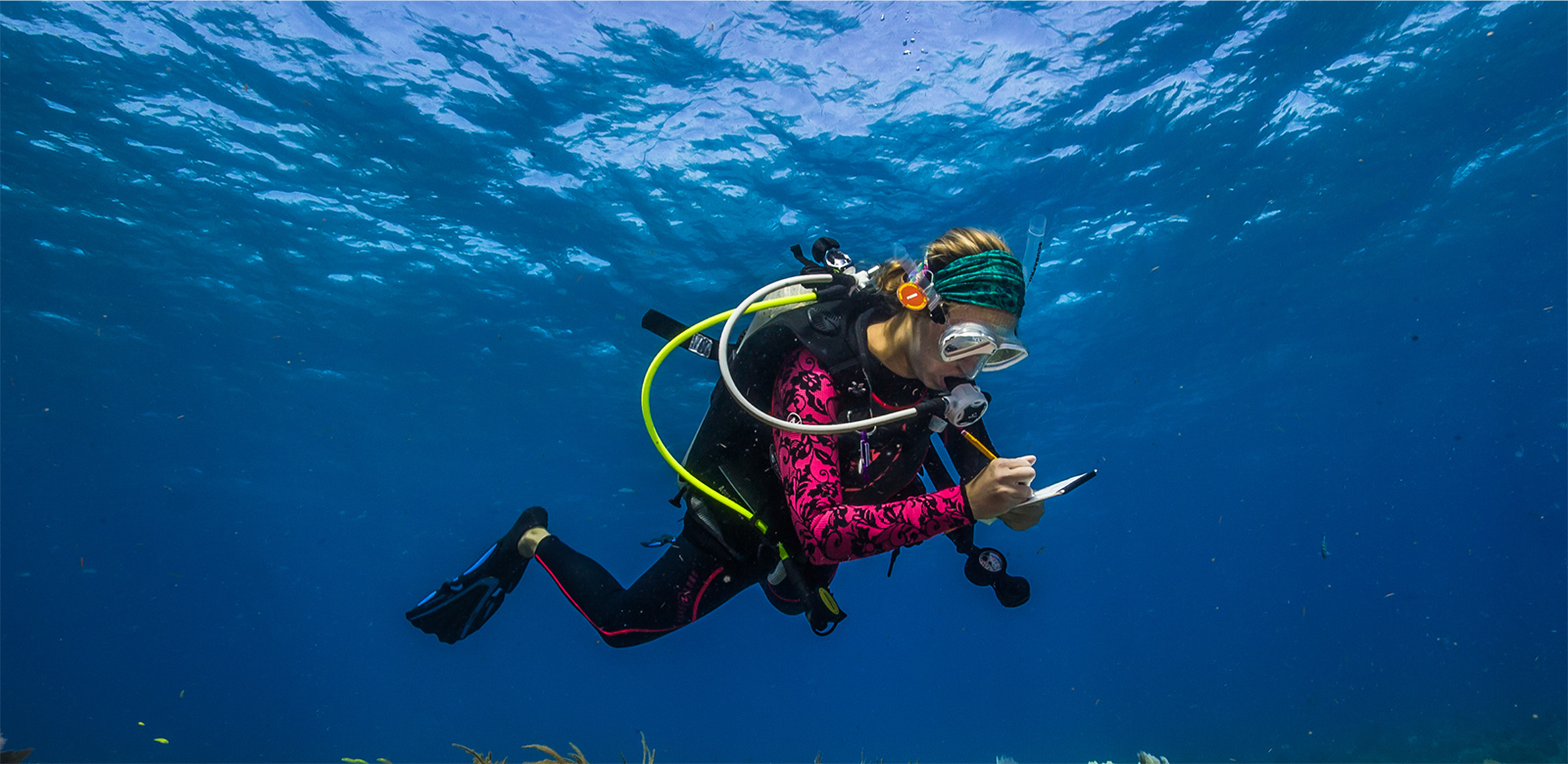
Credit: Shaun Wolfe / Ocean Image Bank
-
Evolution reverses the effect of network structure on metapopulation persistence
McManus et al. 2021
•
Current ecological theory predicts that random networks with dispersal shortcuts connecting distant sites can promote persistence when there is no capacity for evolution. This paper demonstrates that incorporating evolution and environmental heterogeneity fundamentally alters theoretical predictions regarding persistence in ecological networks.
-
Quantifying global potential for coral evolutionary response to climate change
Logan et al. 2021
•
Using a global ecological and evolutionary model of competing branching and mounding coral morphotypes, this study shows symbiont shuffling was more effective than symbiont evolution in delaying coral-cover declines, but stronger warming rates outpace the ability of these adaptive processes and limit coral persistence.
-
Transitioning to co-management in Caribbean reef fisheries: Tela Bay case study
Rivera et al. 2021
•
Current ecological theory predicts that random networks with dispersal shortcuts connecting distant sites can promote persistence when there is no capacity for evolution. This paper demonstrates that incorporating evolution and environmental heterogeneity fundamentally alters theoretical predictions regarding persistence in ecological networks.
-
Transitioning to co‑management in Caribbean reef fisheries: Tela Bay case study
Rivera et al. 2021
•
We analyzed the 5-year transition process of a Caribbean reef fishery from top-down management to co-management. Despite previous research stating that the Caribbean in general, and Honduras in particular, are not ready for collaborative management approaches we saw that the Tela Bay was able to successfully implement a co-management system.
-
Ecomorphological analyses reveal impact of land-based stressors on stock structure of two commercially important fish species in the Caribbean
Nuñez-Vallecillo et al. 2020
•
Many Caribbean nations lack information on the ecology and biology of marine species, which are essential for food security and livelihoods in the region. This study aimed to advance the knowledge of two commercially important fish species, lane snapper (Lutjanus synagris) and white grunt (Haemulon plumierii), using cost-efficient techniques.
-
Seasonal cycles of phytoplankton biomass and primary production in a tropical temporarily open-closed estuarine lagoon — The effect of an extreme climatic event
Carrasco Navas-Parejo et al. 2020
•
This publication analyzes the impact of extreme climatic events on the primary production and phytoplankton biomass in an estuarine system, using the Los Micos Lagoon in the Tela Bay in Honduras as a case study.
-
Exploring the adaptive capacity of the mussel mariculture industry in Chile
San Martín et al. 2019
•
This publication analyzes the adaptive capacity of the mariculture sector in Chile in the face of climate change. Furthermore, it analyzes the sector’s willingness to invest in adaptive strategies.
-
Social attributes can drive or deter the sustainability of bottom-up management systems
A. Rivera et al. 2019
•
This publication generates an integrated sustainability index to assess the sustainability of bottom-up management systems. The gooseneck barnacle fishery in Northern Spain is used as a case study.
-
Exploring determinants for the implementation of mixed TURF-aquaculture systems
C. Sepúlveda and A. Rivera et al. 2019
•
This publication analyzes the implementation of a mixed Territorial Use Rights for Fishing (TURFs)-aquaculture system in Chile, as a means to offset the costs of TURFs. Furthermore, it pinpoints social capital as the key driver for the successful implementation of the mixed systems.
-
Management for network diversity speeds evolutionary adaptation to climate change
Walsworth et al. 2019
•
This pioneering study is one of the first to demonstrate that management that takes evolution and adaptation into account can help rescue coral reefs from climate change. The results show that smart decisions to protect reefs today lead to the conditions that can help corals adapt to rising temperatures.